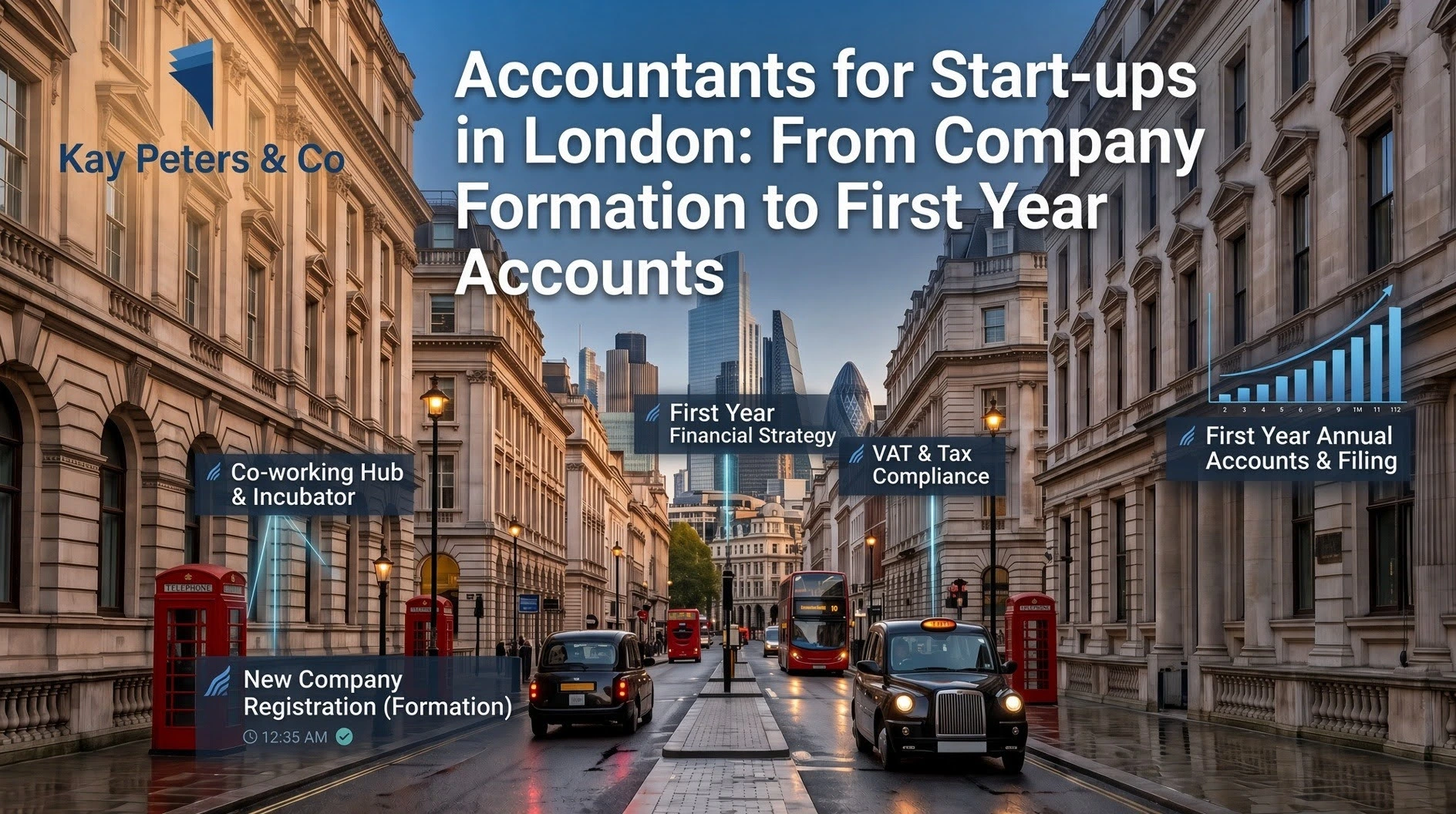


Accounting and Tax Considerations for Tech Startups and Digital Agencies in London

Navigating accounting and tax rules in London can make or break a tech startup or digital agency. With rapid scaling, heavy R&D investment, and international clients, many founders face unexpected compliance costs or miss out on valuable reliefs worth tens or hundreds of thousands of pounds. A clear understanding of UK tax incentives, such as R&D tax credits, combined with robust financial systems, supports sustainable growth while minimising risks in one of the world’s leading tech hubs.
Key Areas We Will Cover:
- Choosing the right business structure for tech and digital firms
- Key tax reliefs and incentives, including R&D credits
- Corporation tax, VAT, and payroll considerations
- Bookkeeping, financial reporting, and compliance best practices
- Funding and investment tax schemes like SEIS and EIS
- Common pitfalls and how to optimise with professional support
Introduction:
Accounting and tax considerations for tech startups and digital agencies in London require specialist knowledge to support innovation while ensuring full compliance. At Kay Peters & Co, we have supported businesses and individuals across London since 1978 with expert accounting and tax advice tailored to dynamic sectors like technology and digital services. Proper planning helps manage cash flow, claim valuable incentives, handle international transactions, and build a strong foundation for long term success in a competitive market.
Choosing the Right Business Structure
Most tech startups and digital agencies in London incorporate as a private limited company. This provides limited liability protection for founders and enhances credibility with investors and clients. A limited company structure also facilitates access to tax reliefs and funding schemes. Sole trader status may suit very early stages or freelancers, but transitioning early supports scalability and asset protection. Partnerships or LLPs can work for collaborative digital agencies, offering flexibility in profit sharing.
R&D Tax Credits: A Major Opportunity for Tech Firms
Tech startups and digital agencies often qualify for substantial R&D tax relief on innovative projects, such as developing new software, algorithms, or overcoming technical uncertainties in digital solutions. Under current rules, the merged RDEC scheme offers a 20 percent credit on qualifying expenditure, while loss making, R&D intensive companies may access the Enhanced R&D Intensive Support (ERIS) scheme for higher benefits. Claims can provide cash refunds or reduced corporation tax, significantly boosting runway and growth. Detailed records of projects, costs, and uncertainties are essential for successful claims.
Corporation Tax and Marginal Relief
Corporation tax rates for the financial year 2026 stand at 19 percent for profits up to 50,000 pounds, with marginal relief applying between 50,000 pounds and 250,000 pounds, and the main rate at 25 percent above that threshold. Strategic planning, including timing of expenditure and utilising capital allowances, helps manage liabilities effectively. Tech firms can also explore the Patent Box regime for reduced tax on profits from patented inventions.
VAT and International Considerations for Digital Agencies
Digital agencies providing services to overseas clients must understand VAT rules for digital and electronic services. The VAT registration threshold and place of supply rules apply, with potential requirements for reverse charge mechanisms. Accurate tracking of client ad spend versus agency fees ensures correct treatment and avoids profit distortions. International expansion may introduce additional compliance needs, such as transfer pricing.
Payroll, IR35, and Employment Taxes
Hiring developers, designers, or contractors brings payroll responsibilities, including employer National Insurance contributions. IR35 rules remain relevant for off payroll working, particularly in the public sector or with large clients, requiring careful assessment of employment status. Digital agencies should maintain clear contracts and records to mitigate risks. Making Tax Digital for Income Tax will also impact certain unincorporated businesses from April 2026 onwards.
Bookkeeping, Financial Reporting, and Compliance Best Practices
Robust systems are vital. Use cloud accounting software like Xero for real time insights, separating client funds from agency revenue. Regular management accounts, cash flow forecasting, and client profitability tracking support informed decisions. Maintain detailed records for all transactions, expenses, and R&D activities to support compliance and claims. Annual accounts and corporation tax returns must be filed accurately and on time.
Funding and Investment Tax Incentives
London’s tech ecosystem offers access to SEIS and EIS schemes, providing tax relief for investors and helping startups raise capital. Structuring equity correctly, including EMI share options, enhances attractiveness to funders while offering tax efficient rewards for employees. Professional advice ensures compliance and maximises benefits.
Conclusion
Accounting and tax considerations for tech startups and digital agencies in London demand proactive planning to leverage incentives, manage compliance, and fuel sustainable growth. By addressing structures, reliefs, reporting, and funding early, businesses can reduce risks and focus on innovation.
Unlock the Full Financial Potential of Your Tech Startup
Optimise your accounting and tax strategy for long term success? Contact Kay Peters & Co today for expert guidance tailored to tech startups and digital agencies. Our team of Chartered Certified Accountants and Registered Auditors in London provides practical, proactive support. Visit us at 8 Domingo St, London EC1Y 0TA, or book a consultation via our website to secure your financial future.
FAQ
Here are answers to common questions about accounting and tax for tech and digital businesses in London.
⌄
›
›
›
Disclaimer
The information in this article represents the best interpretation and analysis of data and facts at the date it was published. However, it is of a generic nature and cannot constitute advice. Specific advice should be sought before any action is taken. If you would like to discuss how this applies to you, we are available to talk to you. Please make contact using the contact form on the company’s website.