
Limited Company vs Sole Trader: Tax and Accounting Implications for London Businesses

Is incorporating always the smartest move for London businesses in 2026? After recent changes to dividend tax rates and National Insurance, the old rule of thumb no longer holds for many owners. Choosing between a limited company and operating as a sole trader now depends on profit levels, how much you need to withdraw, liability protection and administrative capacity. Getting this decision right affects your tax bill, personal risk and long term growth.
Key Areas We Will Cover:
- Legal status and personal liability differences
- How tax works for each structure in 2026/27
- Accounting and compliance requirements
- Costs, privacy and credibility considerations
- When each option typically makes sense for London businesses
- Practical next steps and professional support
Introduction:
The choice between a limited company and sole trader status remains one of the most important decisions for London business owners. It influences tax liabilities, personal exposure to risk, administrative workload and how clients and lenders perceive the business. In 2026, higher dividend tax rates and changes to employer National Insurance have narrowed the pure tax advantages of incorporation for many, making a careful comparison essential.
Legal Status and Liability
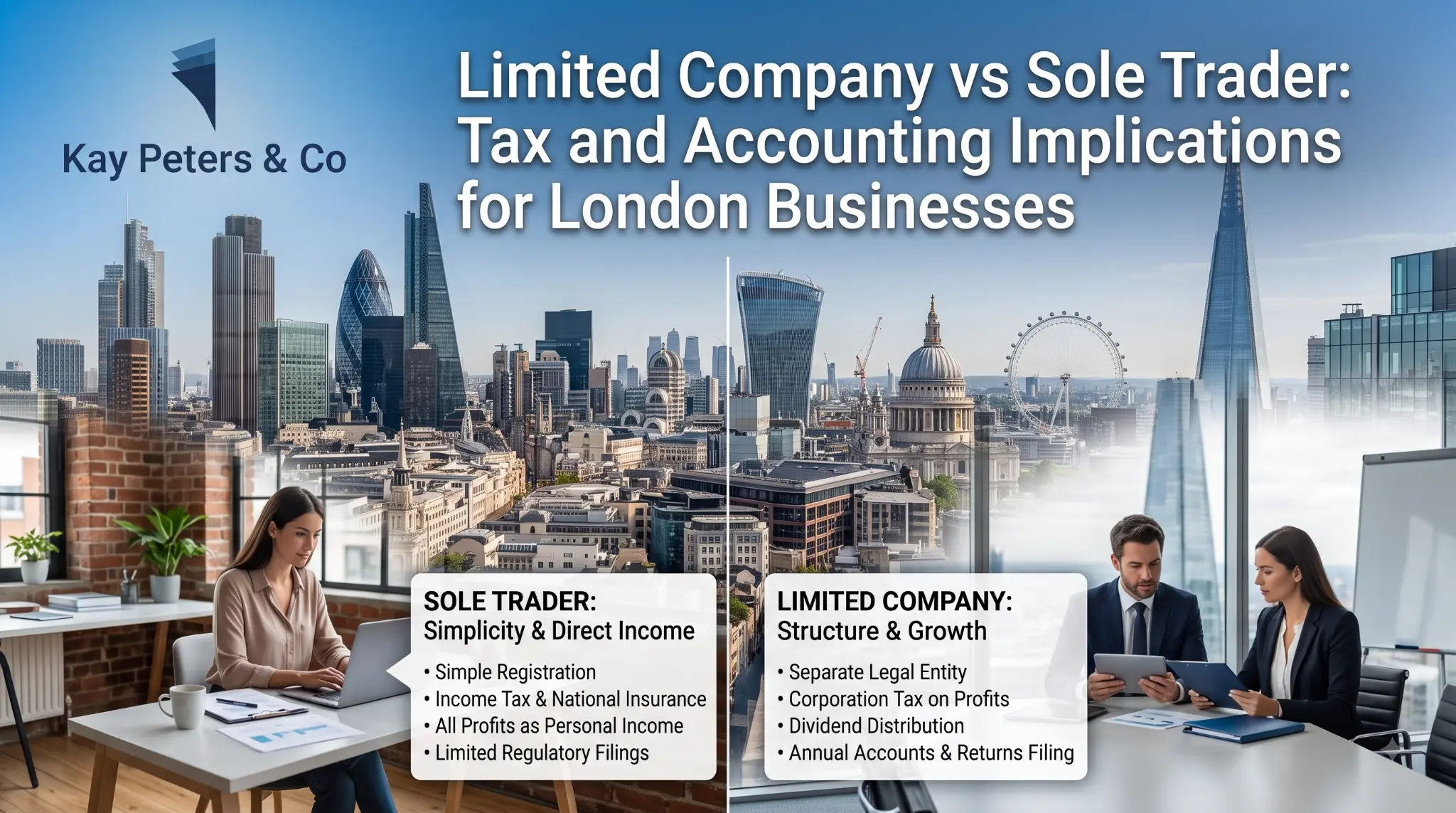
A sole trader and the business are the same legal entity. You have unlimited personal liability for business debts and claims.
A limited company is a separate legal entity. Liability is generally limited to the company’s assets, protecting personal wealth (subject to any personal guarantees). This protection is particularly relevant in London for businesses taking on larger contracts or operating in higher risk sectors.
Tax Implications in 2026/27
Sole trader: Profits are taxed as personal income. You pay Income Tax above the personal allowance and Class 4 National Insurance. The process is relatively straightforward via Self Assessment. Making Tax Digital for Income Tax now applies to many sole traders and landlords above certain thresholds.
Limited company: The company pays Corporation Tax on profits (19% small profits rate up to £50,000, rising with marginal relief to 25% main rate). Directors typically take a combination of salary and dividends. Dividends are taxed at higher rates than previously (basic rate 10.75%, higher rate 35.75% for 2026/27 after the April 2026 increase). Employer National Insurance also applies on salaries above the secondary threshold.
When all profit is extracted each year, the limited company route is often no longer clearly cheaper at lower to mid profit levels once accountancy costs are included. Advantages increase where profits are retained in the company, shared with family shareholders or used for pension contributions.
Accounting and Administrative Requirements
Sole trader: Simpler. Mainly Self Assessment tax returns and basic records. Lower ongoing accountancy fees.
Limited company: Higher administrative burden. Requirements include annual accounts filed at Companies House (publicly available), Confirmation Statements, Corporation Tax returns, and often payroll for directors. Accountancy fees are typically higher, reflecting the extra work.
Privacy, Credibility and Practical Considerations
Sole trader finances remain private. Limited company accounts are filed publicly.
Limited companies often appear more established to larger clients, suppliers and lenders, which can matter in London’s professional and commercial markets. They also offer more flexibility for bringing in investors or selling the business later.
When Each Structure Typically Suits London Businesses
- Sole trader often suits lower profit levels, simple operations, freelancers and those prioritising minimal administration.
- Limited company becomes more attractive with higher or retained profits, greater liability concerns, plans for growth or investment, or when a more professional image is important.
Individual circumstances, including other income, family situation and future plans, always influence the optimal choice. A tailored calculation is essential.
Conclusion:
The limited company vs sole trader decision involves more than headline tax rates. Liability protection, administrative effort, privacy, credibility and long term goals all play important roles. In 2026 the pure tax case for incorporation has narrowed for many, making professional advice more valuable than ever for London businesses.
Ready to Review Your Business Structure?
Contact Kay Peters & Co. today at 8 Domingo St, London EC1Y 0TA, or through our website to book a consultation and position your venture for long term success. Our Chartered Certified Accountants in Central London can model the tax and accounting implications for your specific situation and help you decide with confidence. Visit kaypeters.co.uk to get started.
FAQ
Considering a change of structure? These answers cover common questions.
Is a limited company always more tax efficient than a sole trader in 2026?
›
What is the main non tax benefit of a limited company?
›
How much extra admin does a limited company involve?
›
Can I switch from sole trader to limited company later?
›
How can Kay Peters & Co. help with this decision?
›
Disclaimer
The information in this article represents the best interpretation and analysis of data and facts at the date it was published. However, it is of a generic nature and cannot constitute advice. Specific advice should be sought before any action is taken. If you would like to discuss how this applies to you, we are available to talk to you. Please make contact using the contact form on the company’s website.