
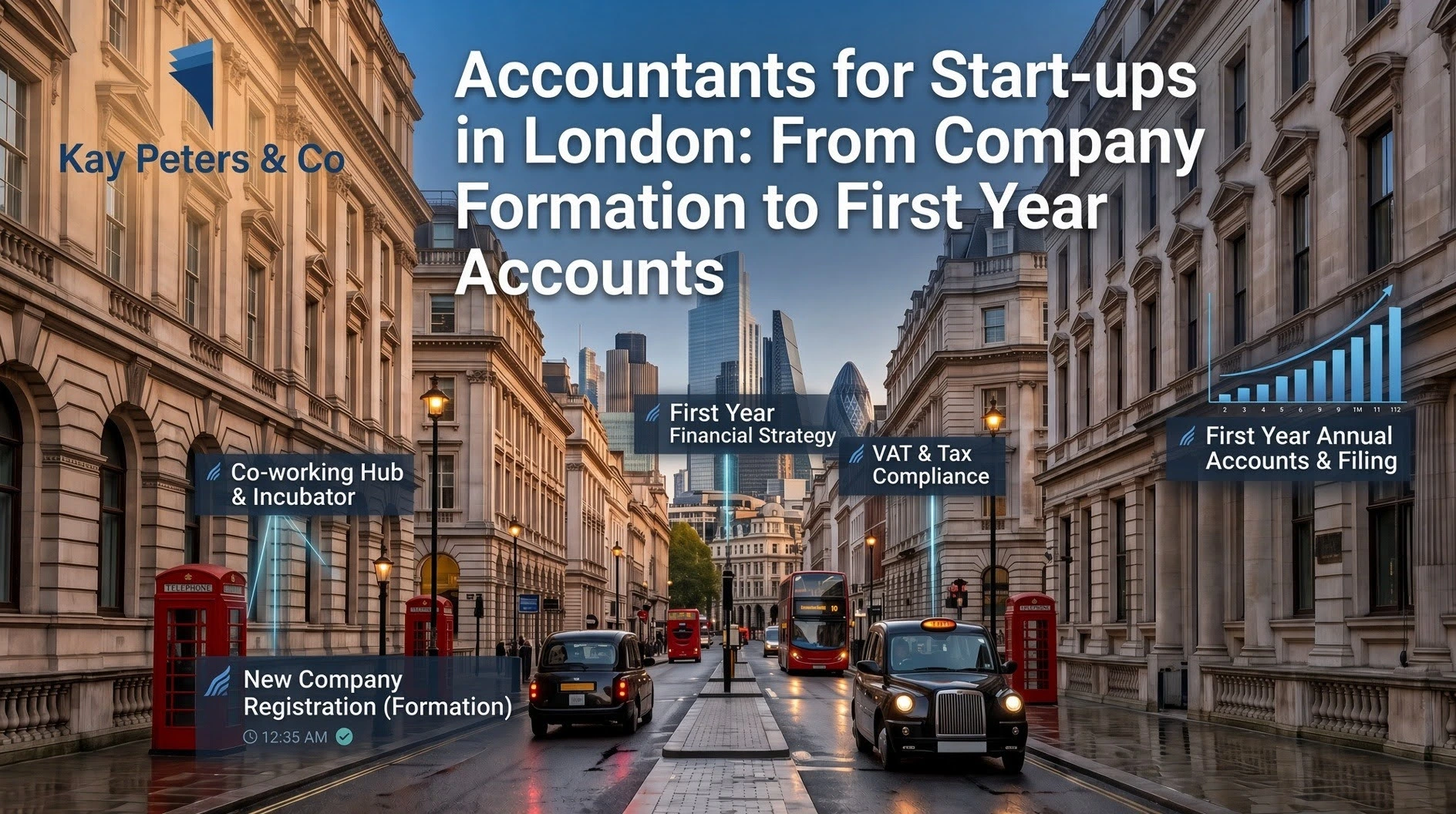
Accountants for Start-ups in London: From Company Formation to First Year Accounts

Launching a start-up in London is exciting, yet the early financial decisions often determine long term success or costly setbacks. From choosing the right structure and registering with Companies House to preparing accurate first year accounts, many founders underestimate the compliance and planning demands. Partnering with experienced accountants for start-ups in London from day one provides clarity, protects against penalties and builds a solid foundation for growth.
Key Areas We Will Cover:
- Why start-ups need specialist accountants from the outset
- Support during company formation and initial registrations
- Essential first year compliance and accounting tasks
- Tax planning opportunities available to new businesses
- How the right accountant adds strategic value beyond filing
- Practical steps and what to expect in the first twelve to twenty one months
Introduction:
Accountants for start-ups in London play a vital role from the moment an idea becomes a registered company. They guide founders through formation, HMRC registrations, bookkeeping setup and the preparation of first year accounts. In a city full of ambitious ventures, professional support reduces risk, unlocks tax efficiencies and frees entrepreneurs to focus on building their business rather than navigating complex deadlines.
Why Start-ups Benefit from Specialist Accountants Early
Many founders delay engaging an accountant until year end, only to discover missed reliefs, incorrect structures or late filing penalties. Early involvement ensures the right legal form, clean records from day one and advice tailored to growth ambitions, funding needs or sector specific rules.
Company Formation Support
A good start-up accountant helps with:
- Advising on limited company versus sole trader or partnership structures
- Preparing and submitting incorporation documents to Companies House
- Setting the accounting reference date and share capital
- Registering for Corporation Tax with HMRC
- Guidance on registered office and director responsibilities
Getting these foundations correct avoids later restructuring costs and compliance issues.
Setting Up for Success: Registrations and Systems
Once incorporated, attention turns to operational readiness. Accountants typically assist with:
- VAT registration (when thresholds or voluntary registration make sense)
- PAYE and payroll setup if employing staff or paying directors
- Cloud accounting software selection and configuration (such as Xero)
- Establishing proper record keeping systems for expenses, invoices and bank transactions
Strong processes at this stage make first year accounts far smoother.
First Year Accounts: Deadlines and Requirements
New companies enjoy extended filing windows. First statutory accounts must reach Companies House within 21 months of incorporation. The Corporation Tax return (CT600) is due 12 months after the accounting period ends, with tax usually payable nine months and one day after the period end.
Most start-ups qualify as micro entities or small companies, allowing simpler accounts formats under UK GAAP (FRS 105 or FRS 102). Accounts typically include a balance sheet, profit and loss account, and supporting notes. Accurate preparation protects the company’s compliance record and supports future funding or due diligence.
Tax Planning Opportunities in the Early Years
Specialist accountants help identify and claim:
- Research and development tax relief where innovation is involved
- Capital allowances on equipment and assets
- SEIS or EIS advance assurance for investor attractiveness
- Optimal director remuneration and expense claims
- Timing of income and expenditure to manage tax efficiently
These opportunities can free up valuable cash when it is needed most.
Beyond Compliance: Strategic Value for London Start-ups
The best accountants act as partners. They provide cash flow forecasts, management accounts, investor ready reports and practical advice on scaling. In London’s competitive environment, this support helps founders make informed decisions and present a professional financial picture to potential partners or funders.
Choosing the Right Accountant for Your Start-up
Look for regulated professionals (ACCA or ICAEW), experience with early stage businesses, transparent pricing and a proactive approach. Local knowledge of Central London and Clerkenwell can also prove valuable for practical meetings and sector insights.
Conclusion:
From company formation through to first year accounts, the right accountants for start-ups in London turn complex obligations into manageable processes and strategic advantages. Early engagement builds clean records, maximises available reliefs and positions the business for confident growth.
Ready to Launch with the Right Financial Foundations?
Contact Kay Peters & Co. today at 8 Domingo St, London EC1Y 0TA, or through our website to book a consultation and position your venture for long term success. As Chartered Certified Accountants and Registered Auditors based in Central London, we support start-ups from formation to first year accounts and beyond. Visit kaypeters.co.uk to get started.
FAQ
Founders often share similar questions when preparing to engage professional support. The answers below address the most common concerns.
Do I need an accountant before I incorporate my company?
›
When are first year accounts due for a new London limited company?
›
What tax registrations does a new start-up need?
›
Can an accountant help with funding readiness?
›
How can Kay Peters & Co. support my London start-up?
›
Disclaimer
The information in this article represents the best interpretation and analysis of data and facts at the date it was published. However, it is of a generic nature and cannot constitute advice. Specific advice should be sought before any action is taken. If you would like to discuss how this applies to you, we are available to talk to you. Please make contact using the contact form on the company’s website.