
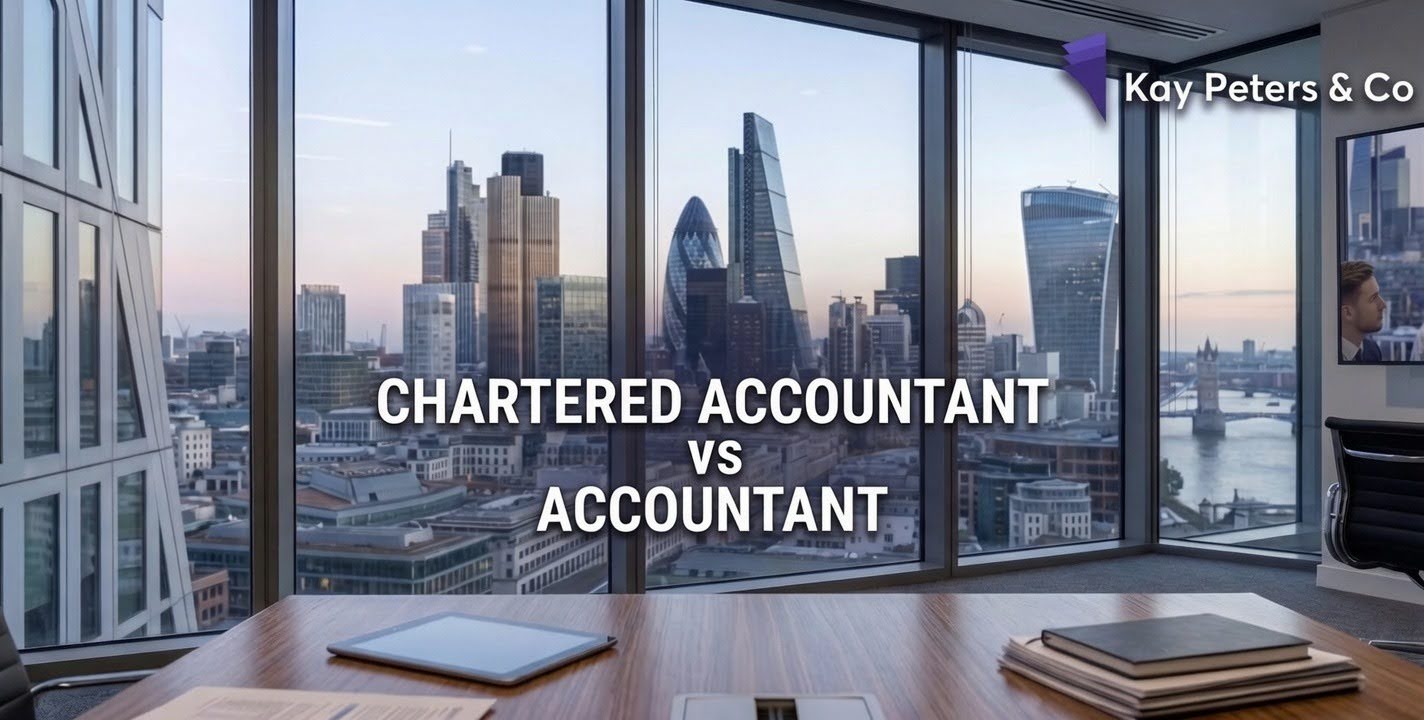
Chartered Accountant vs Accountant: What’s the Difference and Why It Matters for Your London Business

Anyone can call themselves an accountant in the UK, but not everyone holds the protected title of chartered accountant. For London businesses navigating complex regulations, audits, and growth opportunities in 2026, this distinction can mean the difference between basic compliance and strategic success. A chartered accountant offers regulated expertise, ethical standards, and advanced capabilities that a generic accountant may not.
Key Areas We Will Cover:
- The key differences between a chartered accountant and a generic accountant
- Qualifications and training requirements (ICAEW, ACCA, and others)
- Regulatory advantages and protections
- A clear comparison table for quick reference
- When to choose each type for your London business
- London-specific examples, including audits for growing firms
- Why Kay Peters & Co. stands out as your trusted partner
Introduction:
Understanding the difference between a chartered accountant and a generic accountant is essential for London businesses seeking reliable financial support. While both can handle day-to-day tasks, only chartered professionals undergo rigorous training and ongoing regulation. This matters significantly in London’s competitive environment, where precision, compliance, and strategic insight drive long-term success.
What Is a Chartered Accountant?
A chartered accountant (often using designations like ACA, FCA from ICAEW, or ACCA for chartered certified accountants) has completed extensive professional training, passed demanding examinations, and gained practical experience under supervision. They commit to continuous professional development and adhere to strict ethical codes.
What Is a Generic Accountant?
By law, anyone can use the title “accountant” without specific qualifications. Generic accountants may offer bookkeeping, basic tax returns, or payroll services, but they lack the mandatory oversight, advanced training, and protected status of chartered professionals.
Qualifications and Training: ICAEW, ACCA, and Beyond
- ICAEW (ACA/FCA): Rigorous focus on auditing, financial management, taxation, and business strategy, with three to five years of practical experience.
- ACCA (Chartered Certified Accountant): Globally recognised, with emphasis on flexibility, ethics, and international standards.
- Generic accountants: No mandatory professional exams or supervised training required.
Regulatory Advantages of Choosing a Chartered Accountant
Chartered accountants are monitored by professional bodies, must hold practising certificates and professional indemnity insurance, and follow a formal code of ethics. This provides clients with reassurance, recourse in case of issues, and confidence that advice meets the highest standards. Generic accountants operate without this level of accountability.
Comparison Table: Chartered Accountant vs Accountant
| Aspect | Chartered Accountant | Generic Accountant |
| Qualifications | Rigorous exams + 3-5 years supervised experience (ICAEW/ACCA) | No mandatory qualifications |
| Regulation | Subject to professional body oversight, ethics code, and monitoring | Unregulated |
| Services Offered | Auditing, strategic advice, complex tax planning, business growth | Basic bookkeeping, simple tax returns |
| Insurance & Protection | Professional indemnity insurance required | None mandated |
| Suitability for London Businesses | Ideal for audits, scaling firms, international work | Suitable for very basic admin tasks |
| Cost vs Value | Higher initial fee, greater long-term savings and protection | Lower cost, higher risk of errors or penalties |
When to Choose a Chartered Accountant for Your London Business
Opt for a chartered accountant when your business requires:
- Statutory audits (essential for growing limited companies)
- Complex tax planning or R&D claims
- Strategic financial advice for expansion or funding
- Handling international transactions common in London
London Examples: A tech startup in Shoreditch preparing for investment needs audit-ready accounts and investor-ready forecasts. A professional services firm in the City facing HMRC scrutiny benefits from regulated expertise to minimise risks.
When a Generic Accountant Might Suffice
For very early-stage sole traders or micro-businesses with straightforward needs (basic record-keeping or self-assessment), a generic accountant or bookkeeper may be adequate initially. However, as your London business grows, upgrading to a chartered professional prevents costly oversights.
Why Kay Peters & Co. – Your Chartered Certified Accountants in Central London
Kay Peters & Co. is a firm of Chartered Certified Accountants and Registered Auditors based in Clerkenwell, Central London. We combine technical excellence with practical, forward-thinking advice to help businesses take control of their finances and grow with confidence. Our regulated status and local expertise make us the ideal partner for London companies seeking reliability and results.
Conclusion:
The difference between a chartered accountant and a generic accountant lies in qualifications, regulation, and the depth of support provided. For London businesses aiming for compliance, efficiency, and sustainable growth in 2026, partnering with a chartered professional is a wise investment that delivers peace of mind and tangible benefits.
Ready to Partner with a Chartered Accountant in London?
Contact Kay Peters & Co. today at 8 Domingo St, London EC1Y 0TA, or through our website to book a consultation and position your venture for long term success. Our Central London team is here to help you navigate the differences and choose the right path for success. Visit kaypeters.co.uk to get started.
FAQ
Still unsure about the best option for your business? Our FAQ section addresses common concerns.
Can anyone call themselves a chartered accountant in the UK?
›
Is a chartered accountant more expensive than a regular accountant?
›
Do all London businesses need a chartered accountant?
›
What qualifications should I look for in a London chartered accountant?
›
How can Kay Peters & Co. help my London business?
›
Disclaimer
The information in this article represents the best interpretation and analysis of data and facts at the date it was published. However, it is of a generic nature and cannot constitute advice. Specific advice should be sought before any action is taken. If you would like to discuss how this applies to you, we are available to talk to you. Please make contact using the contact form on the company’s website.